Property for sale in Saint Lucia

Buying in Saint Lucia means looking past the view to the ground beneath it.

A villa in Soufrière or a lot in Cap Estate might look perfect, but Saint Lucia's steep volcanic terrain and strict coastal regulations mean the real work starts after the photos. Navigating the Aliens' Landholding License via the Ministry of Agriculture, tracking slope stability reports, and compiling DPA approvals can stall a purchase for months if unorganized. estateTT keeps your practical questions and required documents tied directly to the listing.

The advantage of local preparation

You avoid making non-refundable deposits on properties that have unresolved family land title defects or severe seasonal access issues.

Your attorney receives a complete history of the property's access, easements, and ownership context, significantly speeding up the Land Registry search.

You can confidently compare a coastal property in Rodney Bay against a hillside villa in Soufrière based on real logistical and engineering costs, not just the asking price.

estateTT is a workflow and organization platform for buyers. We do not verify land titles, certify slope stability, approve Aliens' Landholding Licenses, issue property valuations, hold deposit funds, or act as your legal representative in Saint Lucia. For legal compliance and structural verification, consult qualified Saint Lucian attorneys and licensed engineers.

Workflow

Securing your purchase on a volcanic island

Market context

Foreign buyers and diaspora investors need to know that purchasing property requires an Aliens' Landholding License, verifying current land tax receipts at the Inland Revenue Department, and navigating complex customary "family land" tenure at the Land Registry. Organizing these requirements early prevents non-refundable losses and ensures your offer is taken seriously by local vendors.

The gap between liking a property and legally owning it in Saint Lucia is filled with specific local requirements that demand precise organization.

1

Track terrain and access

Monitor topographical surveys, shared road maintenance agreements, and easement rights before you commit to a hillside property. Keeping these logistical documents organized ensures you understand the true cost of year-round accessibility.

2

Compile DPA permissions

Track the status of existing structures or planned renovations against the Development Permission Authority (DPA) approvals. Organizing these certificates early prevents your bank's valuator from flagging unpermitted earthworks or retaining walls.

3

Organize title records

Keep your attorney's notes on Land Registry searches, crown land boundaries, and complex family land heir agreements in one centralized file. A clear paper trail accelerates the conveyancing process and protects your deposit.

Workflow pressure

Where Saint Lucia property deals stall

The friction rarely comes from the price. It comes from the logistics of the land and the regulatory compliance required to build on it.

The access road washes out

A property looks accessible online, but the buyer realizes the unpaved access road is completely impassable during the heavy November rains. Failing to organize easement and maintenance agreements upfront traps you in an unreachable asset.

Missing DPA approvals

The seller added a second story, a guest cottage, or a major retaining wall without planning permission, and the buyer's bank refuses to finance it. Unpermitted structures immediately derail mortgage commitments and force costly legalization processes.

The drainage dispute

Heavy tropical rains reveal that the property's hillside runoff damages a neighbor's land, triggering a boundary and liability dispute. Without organized topographical surveys and drainage reports, buyers inherit severe legal and structural headaches.

estateTT AI

How estateTT AI supports your search

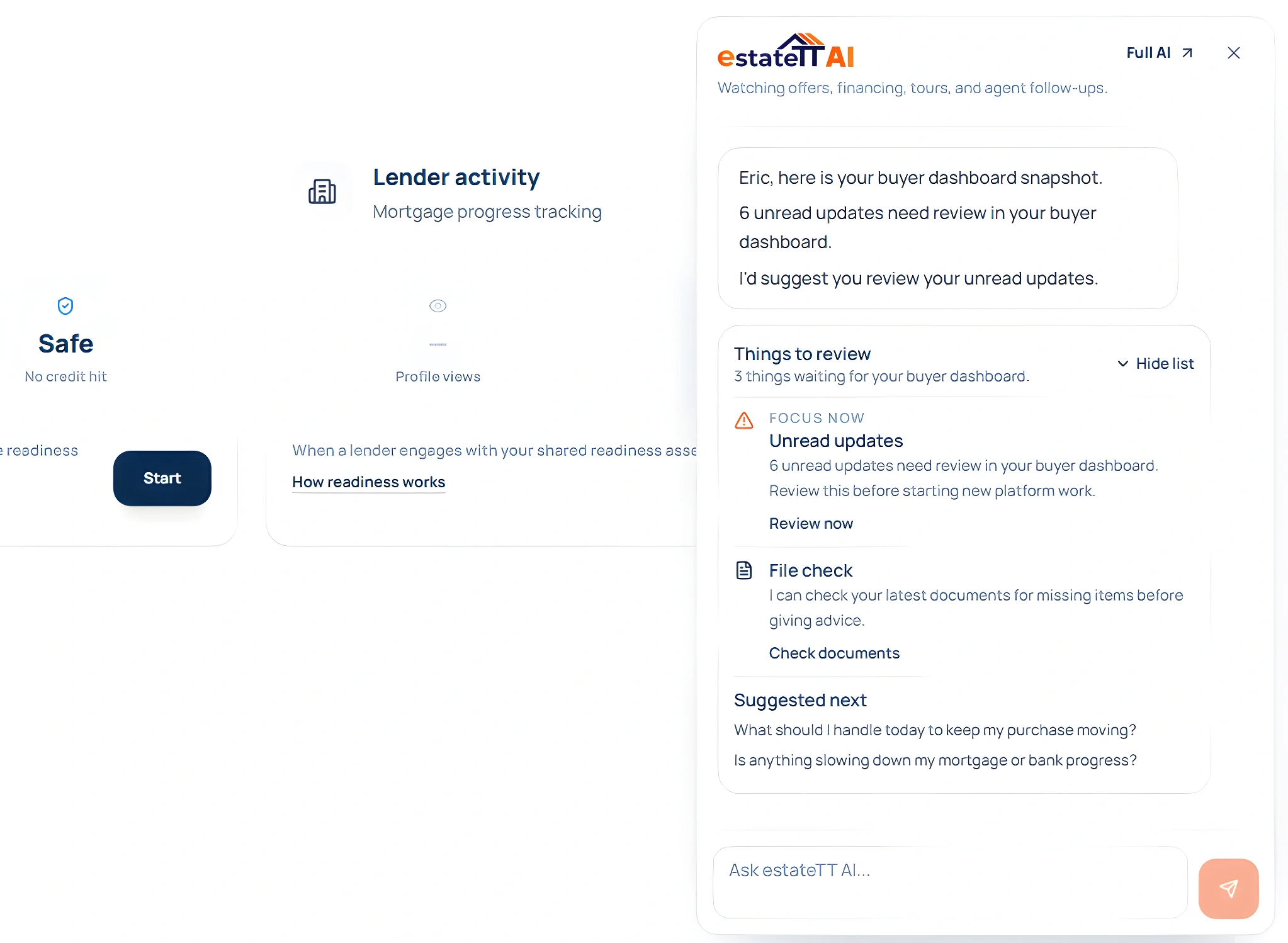
estateTT AI scans your shortlist and highlights the local logistical and legal gaps you need to ask about, keeping your due diligence organized without replacing professional advice.

Flag terrain risks

Reminds you to request retaining wall inspections, soil stability reports, and drainage plans on steep hillside listings. This organizational nudge ensures you address volcanic terrain risks before committing capital.

Track DPA status

Keeps your notes on physical planning permissions, environmental permits, and completion certificates attached to the specific property record. Centralizing these documents prevents unpleasant surprises during the bank's valuation.

Stays in its Lane

estateTT AI does not certify slope stability, approve Aliens' Landholding Licenses, or provide legal counsel. It organizes your documents and data so you can ask the right people the right questions.

How it works

Your path to Saint Lucia ownership

1

Define your use case

Decide if this is a permanent residence, a vacation home, or a tourism investment, as this dictates the specific Aliens' Landholding License requirements and tax obligations you must track.

2

Document access conditions

Factor in the condition of the access roads, especially during heavy rains, and organize any shared driveway or easement agreements. Verifying year-round reachability protects your investment from seasonal isolation.

3

Instruct local counsel

Hire a Saint Lucia-registered attorney early to begin the title search and explain the local conveyancing process. Providing them with an organized file accelerates their initial review of complex family land or registered titles.

4

Organize license paperwork

Gather your IDs, bank references, and source of funds required for the Aliens' Landholding License application. Having these documents compiled in advance reduces processing delays with the Ministry of Agriculture.

5

Track valuation logistics

Ensure the valuator has the necessary access instructions, 4x4 requirements, and comparable data to satisfy your lender. A well-prepared valuation file supports both your financing and your terrain risk assessment.

Questions

Buying property in Saint Lucia

Can estateTT tell me if a hillside property is safe?

No. estateTT helps you keep your search questions and professional notes organized, but assessing slope stability, drainage, or structural safety requires a licensed Saint Lucian engineer or commissioned land surveyor.

How do I handle buying customary "family land"?

Family land often lacks a formal registered Deed and involves multiple heirs. You must use an attorney to trace the root of title and get all heirs to sign off. estateTT helps you track which heirs have provided their required documents.

Does the platform handle the deposit?

Never. Your deposit must be held in the client account of your registered Saint Lucia attorney or a regulated stakeholder. estateTT only tracks the payment status and related documentation; it never holds client funds.

What if the property has unpermitted extensions?

Any structure or earthwork built without DPA approval can complicate your mortgage and insurance. Your attorney must verify completion certificates before you close, and estateTT helps you track these specific document requests.