Capture what the enquiry is really about
Keep the client, property interest, timing, budget conversation, questions, and next action together so the first reply becomes a usable brief rather than another isolated message.
When buyers, sellers, listings, viewings, offers, and follow-up compete for attention, the next opportunity can disappear inside the day. estateTT gives agents one property-aware workspace for the work behind each client conversation.
estateTT individual agent account
Listings, clients, appointments, offers, and follow-up
Capture
Create the client record
Qualify
Clarify intent and timing
Match
Connect clients and listings
Follow up
Keep activity visible
Move forward
Coordinate the next step
Start with the client context
The advantage is not knowing more neighbourhood names than the client. It is being ready with the right property context, remembering what matters to them, and making the next step feel intentional. A client rarely experiences your entire pipeline. They experience one reply, one viewing, one update, and whether you remembered the detail that shaped their decision.
Keep the client, property interest, timing, budget conversation, questions, and next action together so the first reply becomes a usable brief rather than another isolated message.
Review the client’s priorities beside the listings you manage, then keep viewing activity and property-specific questions connected to the conversation.
Use appointments, messages, documents, and offer activity to see what changed, what remains open, and which follow-up can move the relationship forward.
Where opportunity starts to leak
The difficulty is rarely one dramatic failure. It is the accumulated cost of returning to a conversation without the listing note, viewing outcome, seller response, or next action in front of you.
A name and phone number do not tell you what would make the client act. When their priorities and timing stay buried in chat history, each follow-up begins with reconstruction.
A showing can end with useful reactions, new objections, and seller questions. If those details are not attached to the client and property, the momentum fades before the next conversation.
Buyer questions, seller responses, documents, and professional follow-up can quickly separate. The agent needs a reliable operating record without taking over decisions that belong to clients or qualified professionals.
estateTT individual agent account
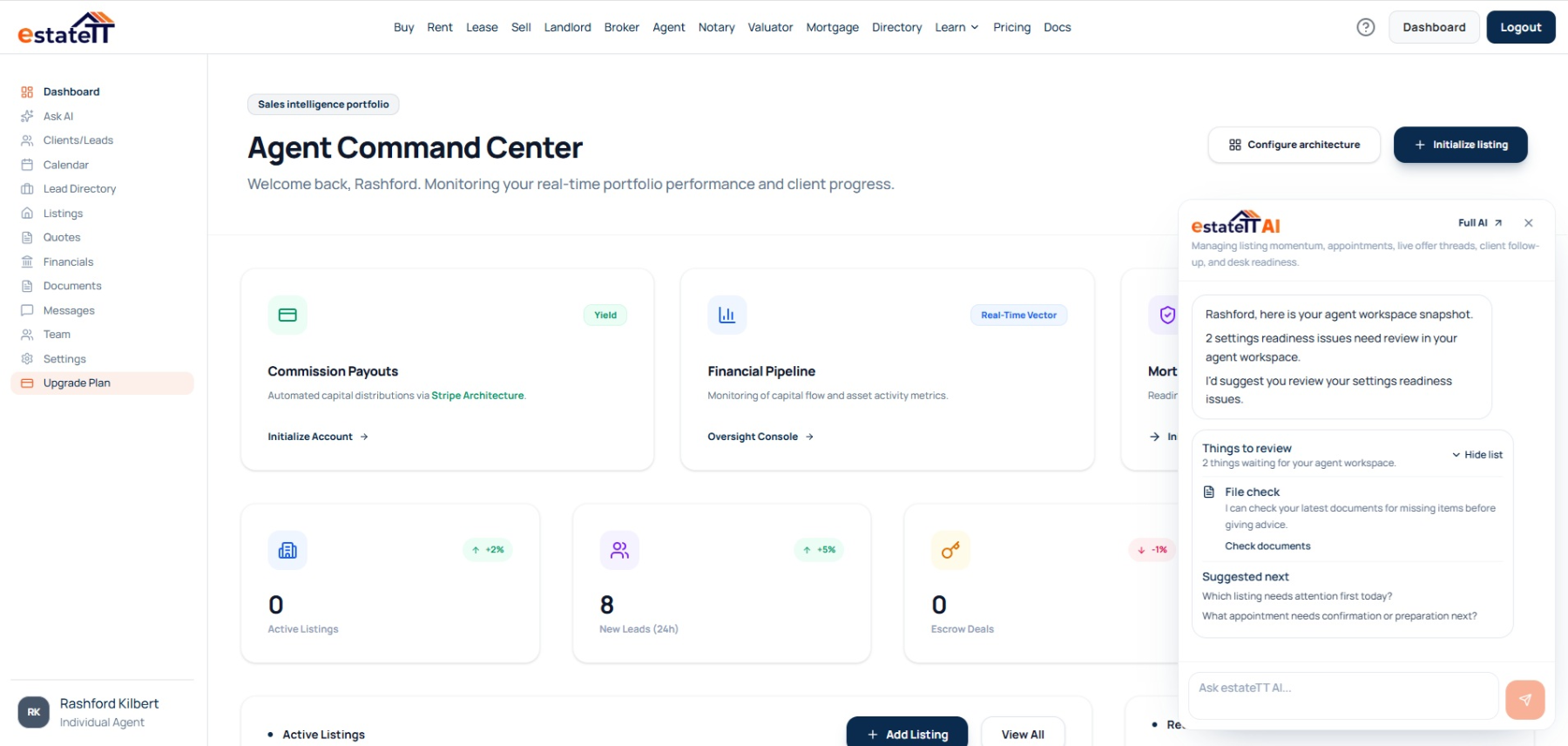
The agent dashboard brings listings, clients, appointments, messages, documents, offers, analytics, and financial activity into the same working environment.
Instead of treating every enquiry as a separate conversation, you can return to the client and property context that explains what happened and what may need attention next.
Keep the properties you represent and the people asking about them visible from the same workspace.
Review scheduled activity, messages, and the conversations that may need your attention.
Keep active offer conversations and supporting records closer to the relevant client and property.
Use analytics and financial views to understand the work moving through your own account.
The agent journey
The account becomes more useful as a first enquiry develops into a qualified brief, matched property work, purposeful follow-up, and a coordinated offer or professional handoff.
01
Turn the first enquiry into a client record with the relevant property interest, priorities, timing, and next action.
02
Clarify what the client is trying to achieve and which questions must be answered before either side invests more time.
03
Connect the brief to relevant listings and keep property-specific questions visible as the shortlist develops.
04
Use appointments, messages, viewing reactions, and open items to return with a purposeful next step.
05
Keep offers, documents, and professional handoffs connected while each party remains responsible for their own decisions.
A connected file still needs responsible people
estateTT gives the agent a property-aware operating workspace. It does not become the client, broker, attorney, valuator, lender, inspector, or regulator responsible for the decision.
Use the workspace to manage the listing and client activity for which you are responsible.
Keep client authority, professional advice, property checks, financing, valuation, and legal decisions with the people responsible for them.
What the agent account helps organize
Organize listings, clients, appointments, messages, and documents
Keep offer and follow-up activity closer to the relevant property work
Review supported analytics, financial activity, and account settings
Use account context to prepare conversations and professional handoffs
What estateTT does not decide
Verify title, property condition, planning status, or another party's representations
Give legal, lending, tax, valuation, or regulatory advice
Negotiate or make decisions on behalf of a client without their authority
Replace brokerage supervision, professional checks, or client judgment
Account-aware AI
estateTT AI can review supported activity inside the agent account and help point you back to listings, appointments, offers, clients, documents, messages, and other work that may need attention.
Return to the account context around a client, listing, appointment, or offer before you follow up.
Use supported workspace signals to review open activity instead of depending entirely on memory at the end of a busy day.
The AI can help organize and explain account activity. It does not negotiate, advise the client, verify property claims, or replace legal, lending, valuation, or brokerage judgment.
Continue through the right route
Move from the individual agent account into live Trinidad and Tobago listings, brokerage support, or the plan information relevant to your practice.
Review the public property inventory your clients may already be exploring.
Use the broker route when the work includes brokerage oversight, linked agents, and team responsibility.
Review the available subscription path before creating the professional account.
Questions before you start
This page leads to the individual_agent account. Broker owners and teams should use the broker route so the account structure matches how their practice operates.
The current workspace includes listings, clients, appointments, messages, documents, offers, analytics, financials, and account settings.
No. estateTT helps organize account activity and coordination. Agents, clients, brokers, attorneys, valuators, lenders, and other qualified professionals remain responsible for their own advice, representations, checks, and decisions.
No. You can begin with the clients, listings, appointments, and conversations that currently need the clearest follow-up, then make the workspace more useful as you bring more of your active work into it.
Keep the offer conversation, relevant messages, documents, and follow-up closer to the client and property record. The client, agent, seller, broker, attorney, and other professionals still make the decisions for which they are responsible.
A profile can introduce you. The workspace helps you continue the work.
Create your individual agent account and keep the client, property, appointment, message, document, and offer context close enough to act on.
estateTT is a technology provider that delivers specialized workflow and organization tools for real estate platform participants in Trinidad and Tobago. estateTT is not a real estate agency, brokerage, legal firm, or financial institution. The platform does not make title, lending, landholding-license, fee, deposit, or transaction-outcome decisions. While the platform reserves the right to review participants to maintain network quality, it does not certify professional credentials or replace independent checks. Users are solely responsible for independently verifying all transaction details, licensing, and legal requirements with qualified local professionals and relevant Trinidad and Tobago regulatory authorities before engagement.