Set expectations before the approach
Present the services, availability, practice information, and request requirements that help suitable property clients recognise the fit.
Show property clients what you handle and where you are available, assess the request before anyone commits to an appointment, and manage suitable matters from first enquiry through quote, session activity, and payment review.
estateTT notary account
Requests, quotes, appointments, documents, and sessions
Join
Choose the right account
Set services
Define what you provide
Review requests
Decide what fits
Quote and schedule
Protect your calendar
Manage matters
Keep accepted work connected
The professional opportunity
The account helps a prospective client explain what is needed and gives the practice enough context to decide whether the matter should move forward.
Present the services, availability, practice information, and request requirements that help suitable property clients recognise the fit.
Review the requested service, people involved, island or location context, timing, documents, and messages before deciding whether to quote.
Keep the client, quote, appointment, documents, communication, session status, and payment review connected once the practice accepts the matter.
Notary CRM and practice management
The Bahamas notary account connects the professional presence clients discover with the commercial and operational work required to serve suitable enquiries.
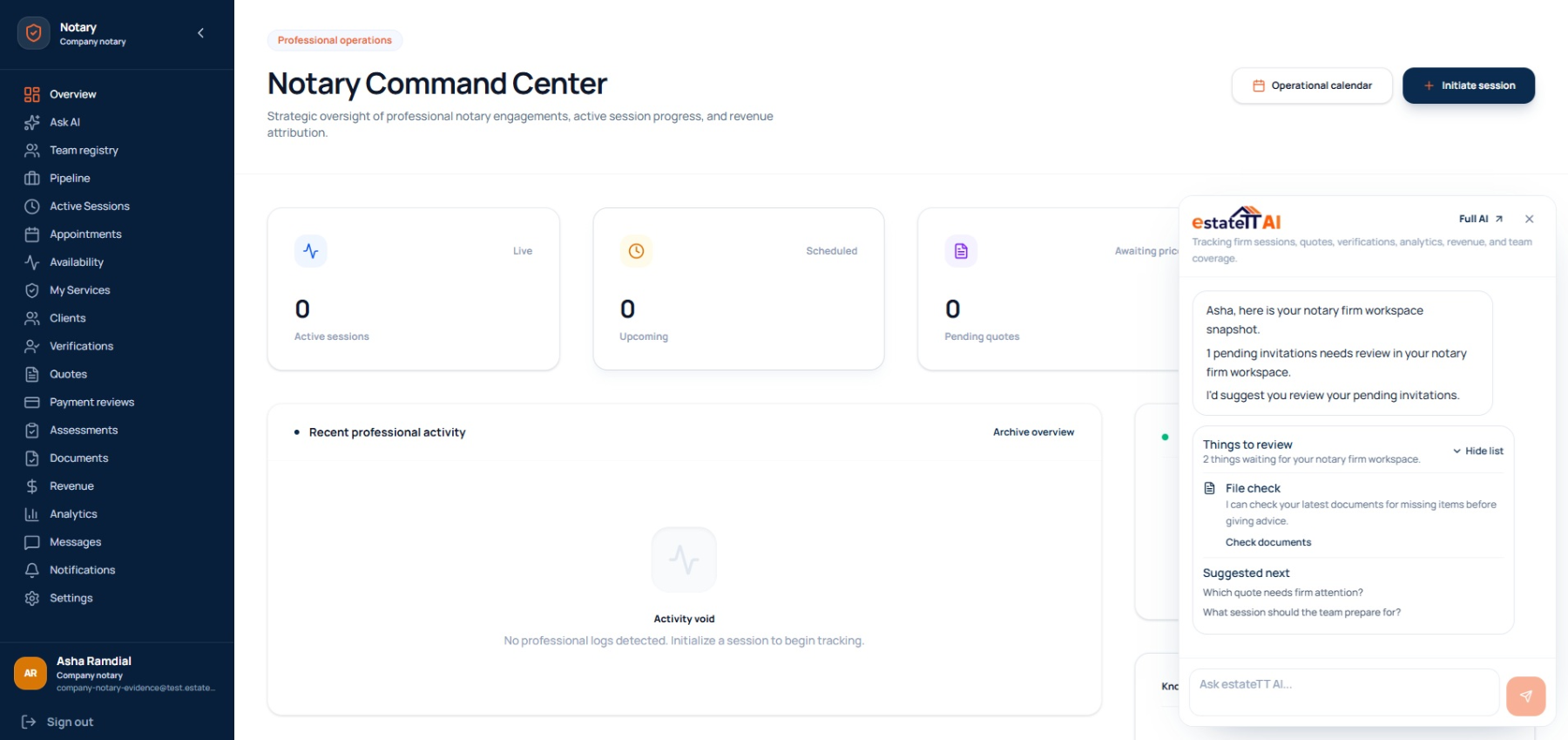
Manage leads, services, clients, availability, quotes, appointments, documents, verification activity, sessions, messages, payment reviews, revenue, and analytics without fragmenting the matter.
The public signup begins with an independent notary account. Practices needing shared access and oversight can compare permission-aware firm plans before subscribing.
Show what the practice provides and give clients clearer availability and request expectations.
Review the service, location, timing, participants, and documents before quoting or scheduling.
Carry client context through quote, appointment, documents, communication, session activity, and payment review.
Use supported revenue, analytics, notifications, and firm controls to understand the practice behind the work.
Where a new request becomes operational pressure
Unclear location, service fit, timing, documents, or attendance can turn a promising enquiry into repeated calls, diary changes, and avoidable coordination.
The client approaches before understanding what the practice handles, forcing a professional conversation around an enquiry that may never fit.
Availability and location expectations emerge only after pricing or scheduling has begun, costing both sides time without producing a matter.
Quotes, appointment changes, documents, session activity, and payment questions spread across channels and make the practice harder to read.
The subscribed-notary path
01
Create the subscribed Bahamas notary account and establish the professional presence clients can discover.
02
Define the services, availability, location context, and request expectations that help clients approach properly.
03
Assess the service fit, people, timing, location, and supplied documents before deciding whether to quote.
04
Turn suitable requests into service quotes and appointments while keeping the client response attached.
05
Coordinate documents, participants, communication, session activity, completion, and payment review around accepted work.
Account-aware AI
estateTT AI can surface supported account activity across requests, quotes, documents, verification activity, sessions, revenue, settings, and updates. It helps the practice find relevant signals without making the professional decision.
Notice supported enquiry, quote, session, document, and follow-up activity that may deserve attention before momentum is lost.
Review relevant account activity before contacting the client instead of reconstructing the matter from separate records.
The AI layer does not interpret law, certify documents, conduct title work, set fees, confirm licensing, or decide whether the notary should act.
A useful partnership keeps the boundary clear
Why subscribe
Across an archipelago, the wrong enquiry can consume time before the practice discovers that the service, location, timing, or documents do not fit. A clearer digital approach helps both sides qualify the opportunity earlier.
Let services, availability, location context, and request expectations help both sides recognise whether the opportunity fits.
Carry suitable enquiries through clarification, quote, appointment, documents, and session activity in one account.
Review active matters, payment reviews, revenue, notifications, and supported analytics together.
Choose with context
Buyers, sellers, and professionals may encounter a need for notarial support at different points in the property journey. These routes show the wider platform surrounding the request.
Review the broader estateTT proposition for independent notaries and firms.
Compare the independent subscription with firm options for shared access and oversight.
See where property interest and preparation can develop into a need for professional support.
Questions
Yes. The practice can present its services, availability, information, and request expectations so prospective clients have a clearer basis for approaching. The notary still decides whether the location and matter fit.
No. Licensing remains governed by The Bahamas Notaries Public Act and the responsible public authorities. The account is a commercial and practice-management tool, not authority to practise.
No. The subscription creates visibility and a route for managing suitable opportunities, but enquiries, accepted matters, client decisions, fees, and revenue cannot be guaranteed.
Yes. The practice controls its services, availability, fees, quotes, and acceptance decisions. Every professional decision remains with the notary.
The public signup begins with an independent notary account. Practices requiring permission-aware team access and oversight can compare the available firm plans.
Create the independent Bahamas notary account to present your services, assess fit, quote, schedule, and manage accepted matters. Compare firm plans if the practice needs shared access.
An estateTT subscription provides professional-presence and practice-management tools. It does not issue the licence required under The Bahamas Notaries Public Act, establish eligibility to practise, certify documents, provide legal advice, conduct title work, hold client funds, or replace the notary’s professional responsibilities.