Name the island and service area
Record the island and exact location, road or sea access where relevant, surrounding uses, proposed development, phase plan, current status, media, and utility or infrastructure contacts.
A buyer needs to know whether the exact lot or unit has an installed connection, an application path, extension work, owner authorisation, or only infrastructure somewhere in the area. estateTT keeps that distinction connected to the project, island, inventory, source document, enquiry, and next responder.
estateTT developer account
Projects, units, buyer activity, and team work
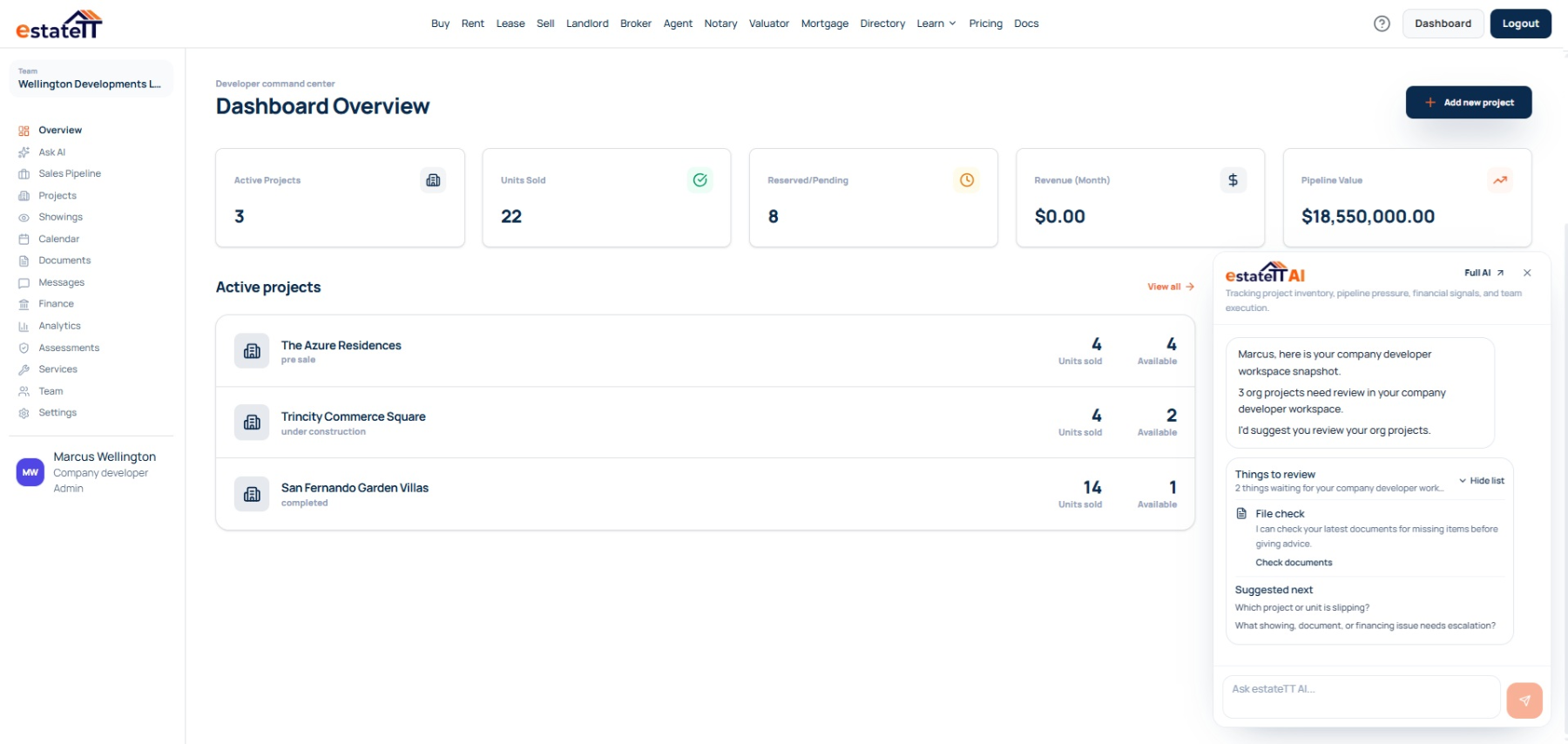
Set up
Create the project record
Add units
Publish current inventory
Manage interest
Keep buyer activity visible
Coordinate
Connect records and people
Move forward
Track the next stage
Start with the operating record
A project-wide “utilities available” claim does not tell a buyer what applies to a specific lot or unit. Keep the property, island, application or connection stage, supporting record, and person handling the question together. Use the developer workspace to connect what is being sold with its access, utilities, planning references, construction status, supporting documents, and buyer activity.
Record the island and exact location, road or sea access where relevant, surrounding uses, proposed development, phase plan, current status, media, and utility or infrastructure contacts.
Give each property its own price, availability, dimensions, water, sewerage, electricity, road, drainage, communications, specifications, construction status, relevant applications, and supporting records.
Connect the buyer, preferred inventory, intended use, visit notes, remote questions, requested evidence, messages, and next action so NAWASA, GRENLEC, planning, the project team, or another qualified party receives the exact question.
Where project momentum starts to fragment
Confidence drops when service, ownership-authorisation, access, construction, and availability language is broader than the evidence for the lot or unit being discussed.
Water pressure, line proximity, extension work, meter or connection status, electricity supply, roads, drainage, or communications can differ by phase and property. Attach each fact and open question to the inventory it affects.
NAWASA’s process can require ownership or permission evidence. If the developer, occupier, contractor, and eventual owner are not clearly identified, the service conversation arrives late and becomes part of the sales problem.
Access, local logistics, infrastructure, service work, professional availability, and construction timing should be recorded for the project’s actual island instead of copied from the main island.
The developer workspace
Keep every project tied to its actual island and location, then connect phases, inventory, utility stages, relevant land and planning references, visits, buyer activity, documents, finances, and follow-up.
An individual developer can manage one focused project directly. A company account can coordinate sales, projects, utilities, construction, finance, operations, and island-based contributors while controlling access.
Keep the island, exact location, access, project phase, relevant land references, status, media, and sources clear.
Record availability, price, specifications, water, sewerage, electricity, roads, drainage, communications, applications, extensions, installations, and connections for each property.
Attach visits, remote questions, requested evidence, messages, appointments, and next actions to the relevant lot or unit and responder.
Coordinate documents, team access, calendars, pipeline activity, project financial records, payment milestones, analytics, and current work.
The developer journey
The account becomes more useful as the work moves from project setup into inventory, buyer activity, transaction coordination, and the professional work around each unit.
01
Record the island and exact location, access, surrounding uses, proposed development, phase, lot or unit, relevant land references, current status, and media.
02
Distinguish infrastructure nearby, application requirements, owner authorisation, extension work, installation, meter or connection, active service, and unresolved questions for water, sewerage, electricity, roads, drainage, and communications.
03
Connect buyer observations about access, boundaries, drains, lines, poles, meters, tanks, construction, neighbouring uses, and documents to the exact inventory item.
04
Assign the open question to the right authority, utility, project lead, or qualified professional, and keep the response attached to the property.
05
Keep the buyer, property, visits, records, appointments, pipeline stage, and financial file connected as financing, valuation, legal, construction, payment, and transfer work proceeds.
A connected project still needs qualified people
estateTT gives the developer team a property-aware operating workspace. It does not become the person responsible for project approvals, professional advice, funds, construction, or the legal transaction.
Manage project information, inventory, buyer conversations, and internal follow-up from the developer workspace.
Provide the planning, legal, valuation, lending, payment, construction, inspection, and other professional work the project and buyer require.
What the developer account helps organize
Create project records and manage unit context
Keep buyer interest, showings, messages, and pipeline stages visible
Organize project documents, team activity, calendars, and financial records
Use workspace context to prepare the next conversation and handoff
What estateTT does not decide
Approve planning, environmental, or construction work
Give legal advice, decide title, or complete a transfer
Approve financing, buyer eligibility, or valuation conclusions
Hold funds, release payments, or decide transaction outcomes
Account-aware AI
estateTT AI can help surface a utility question without an owner, a property record missing its source, or a buyer request that has gone quiet. It cannot verify planning permission, ownership, authorisation, water, electricity, infrastructure, boundaries, value, construction, financing, or legal questions.
Review notes and messages for “water available,” “power nearby,” or similar statements that still need a source, date, current stage, and person responsible for the answer.
Bring the island, project, phase, lot or unit, authorisation records, service notes, documents, buyer, and recent activity together before the team replies.
Planning authorities, NAWASA, GRENLEC, registries, surveyors, engineers, attorneys, valuators, lenders, and contractors must confirm the matters that depend on their authority or professional work.
Bring in the right support
Keep the exact island, property, utility stage, and supporting records together while the buyer prepares for financing or professional review.
Choose an individual workspace for one focused project or a company account for controlled team access across several projects or islands.
Help a financing-dependent buyer organize income, debt, deposit, property, insurance, and document questions before approaching a lender.
Move ownership, deed, permission, contract, signing, development-condition, and transfer questions to an appropriate Grenada legal professional.
Questions before you set up
No. The workspace can store the developer’s service notes, applications, authorisations, estimates, documents, dates, and follow-up. NAWASA, GRENLEC, and the relevant professionals must confirm the actual property-specific position.
Keep the ownership or occupancy documents used for the application, the applicant, the affected property, and the current status together. Confirm the final requirements directly with NAWASA rather than asking the sales team to interpret them.
Yes. Keep each project’s island, access, utility area, inventory, documents, contributors, buyer pipeline, and financial records distinct while controlling access across the company.
No. Planning authorities, NAWASA, GRENLEC, and registries retain their official roles. estateTT keeps the property details, supporting records, buyer questions, and team follow-up together while those processes continue elsewhere.
No. The developer, buyer, relevant authorities, and qualified professionals remain responsible for buyer acceptance, money, financing, title, surveys, valuation, planning, utility decisions, legal advice, inspections, construction certification, payment release, and transfer.
The project page is the beginning, not the operating system.
Create the developer account, add each project and property, then keep utility stages, buyer questions, documents, visits, and team follow-up together.
estateTT is a technology provider that delivers specialized workflow and organization tools for real estate platform participants in Grenada. estateTT is not a real estate agency, brokerage, legal firm, or financial institution. The platform does not make title, lending, landholding-license, fee, deposit, or transaction-outcome decisions. While the platform reserves the right to review participants to maintain network quality, it does not certify professional credentials or replace independent checks. Users are solely responsible for independently verifying all transaction details, licensing, and legal requirements with qualified local professionals and relevant Grenada regulatory authorities before engagement.