Describe the property and its access clearly
Add the address, town or region, property type, rooms, floor and land area, features, images and description buyers will use before deciding whether to enquire or arrange a viewing.
Show buyers where the property sits, how it is reached and whether transport, deed, lease, survey or condominium questions still need qualified review. Then keep enquiries, visits, records and offers attached to the same Guyana property.
estateTT seller account
The Guyana property and the record questions around it
Prepare
Clarify land and access
List
Name the record carefully
Track interest
Connect questions and visits
Review offers
Keep context beside terms
Coordinate
Route registry questions
Before “land for sale” becomes the whole description
A Guyana seller may begin with a town or region, an asking price and photographs. Serious interest can bring questions about access, boundaries, transport, deed or lease context, improvements and which professional should review each issue.
Build the facts you can confirm, keep unresolved issues visible and give later professional conversations a clearer place to begin.
Add the address, town or region, property type, rooms, floor and land area, features, images and description buyers will use before deciding whether to enquire or arrange a viewing.
Transport, deed, lease, survey, planning and improvement questions may call for different records and professional judgment. Keep the question and available document together without claiming estateTT has resolved their legal effect.
Set the listing price you want to present while keeping improvement records and property context available for a qualified valuator or other professional assessment when one is needed.
Where Guyana property language starts to blur
The property changes in one conversation, a viewing moves in another and a record request reaches someone else. The seller account keeps those threads closer to the listing that started them.
A price changes, a measurement needs correction or an access detail needs clearer wording. Update the live listing so buyers and professionals are not working from different accounts of the property.
Transport, deed and lease questions should not be reduced to a confident label without review. Keep the available record and open question visible for the DCRA, legal professional or other authority handling it.
Messages, viewing appointments and pending offers are harder to assess when the property context is somewhere else. Keep them inside the seller workspace before deciding how to respond.
Individual seller account
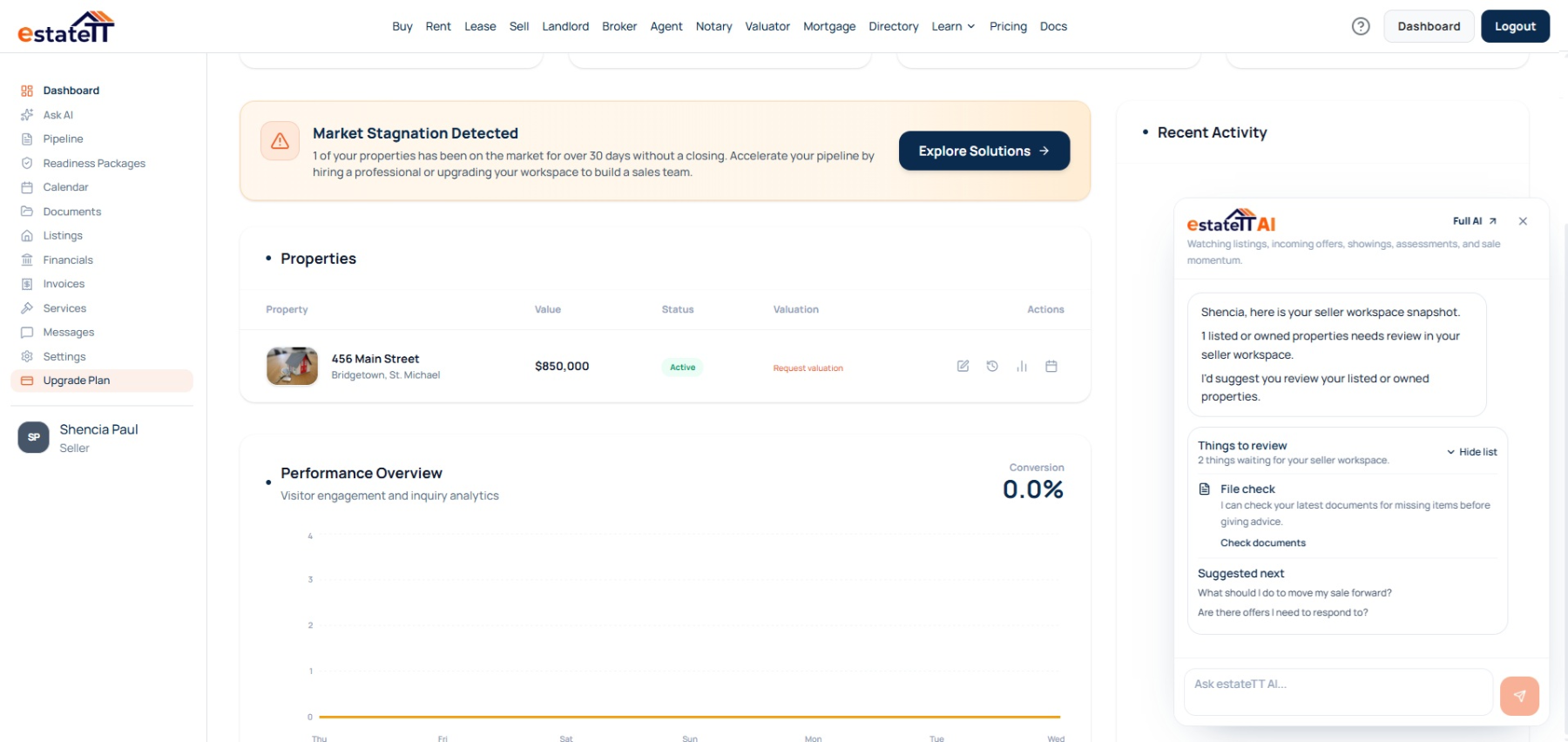
The seller dashboard brings the live property record together with pending offers, messages, documents, appointments, valuation and service requests, and supported activity around the listing.
That continuity matters when a house, commercial property, condominium or parcel of land moves from early interest into visits, record questions and decisions that require the latest information.
Create and update the property details, asking price, status, images and description buyers see.
See listing activity and pending offers without rebuilding the buyer conversation from separate messages.
Keep property records and scheduled visits available as valuators, agents and legal professionals become involved.
Use messages, service requests and the seller pipeline to keep open work visible around the property.
The Guyana seller journey
A useful Guyana listing identifies the property and keeps each open record question distinct. The seller account carries that context into access requests, visits, offers and DCRA or professional conversations.
01
Gather the property facts, photographs and records you can confirm, then identify the transport, deed, lease, survey, valuation or legal questions that need qualified input.
02
Create the sale listing with its asking price, location, property details, features, images and current status.
03
Follow messages and appointments as buyers ask about access, boundaries, improvements, transport, deed, lease or available records.
04
Keep pending offers visible beside the property and take qualified advice before accepting, rejecting or negotiating any terms.
05
Keep documents, appointments, messages and service requests available as the agent, valuator, legal professional or other specialists move their part forward.
When a Guyana listing reaches a registry question
estateTT keeps the Guyana listing and its record questions organized. It does not interpret DCRA records, determine value, negotiate terms or complete the transfer.
Help describe the Guyana location, coordinate access, arrange viewings and support buyer communication where appointed.
Assess location, access, boundaries, condition and improvements when independent professional value is required.
Handle transport, deed, lease, title, conveyancing and other legal questions arising from the sale.
Address surveys, planning, inspections, repairs or financing questions when the property and sale require them.
What the Guyana seller account keeps connected
Publish town or region, access, boundaries and property details
Keep transport, deed or lease questions visible beside the listing
Organize buyer visits, records and professional appointments
Connect pending offers, messages and specialist follow-up
What remains outside the platform
Set or certify the property's market value
Interpret DCRA, transport, deed, lease or planning requirements
Negotiate or accept an offer on the seller's behalf
Hold buyer funds or complete the legal transfer
AI reviewing the Guyana seller account
The individual-seller review agent can inspect supported listings, offers, showings, documents and valuation activity already connected to the account. It remains read-only and advisory.
Ask about supported listing, offer, showing and document activity already tied to the property in your seller workspace.
Bring missing location or access information, unread updates and outstanding seller work back into view before transport, deed or lease questions lose their context.
estateTT AI does not value the property, qualify buyers, negotiate terms, interpret registry records or replace an agent, valuator or qualified legal professional.
When the Guyana listing reaches its limit
Move to the route that fits the next pricing, marketing or legal question around the property.
Prepare the town or region, access, boundaries, condition and improvement context a qualified valuator may need for an independent assessment.
Explore agent support when describing the location, arranging access, managing viewings or maintaining buyer follow-up needs local attention.
Take transport, deed, lease, survey, condominium, party and transaction questions to DCRA guidance and qualified Guyanese legal professionals.
Questions before listing in Guyana
Yes. The individual seller account lets you create and update a sale listing with its property details, asking price, status, images and description. Decide separately whether you also want an agent or broker involved.
No. estateTT lets you enter an asking price and organize property context, but it does not determine market value. Engage a qualified valuator when you need a professional valuation.
Yes. The seller workspace includes document management and a calendar for supported property visits, consultations and professional appointments. You remain responsible for checking every record and participant.
No. estateTT does not interpret registry records, hold buyer funds or complete a property transfer. The Deeds and Commercial Registries Authority publishes official transport and original-lease guidance; confirm the current process with the DCRA and qualified professionals handling the sale.
The listing identifies the property. The seller account carries the record questions.
Create the seller account for the location, access, live listing, buyer questions, visits, records, offers and professional follow-up.
estateTT is a technology provider that delivers specialized workflow and organization tools for real estate platform participants in Guyana. estateTT is not a real estate agency, brokerage, legal firm, or financial institution. The platform does not make title, lending, landholding-license, fee, deposit, or transaction-outcome decisions. While the platform reserves the right to review participants to maintain network quality, it does not certify professional credentials or replace independent checks. Users are solely responsible for independently verifying all transaction details, licensing, and legal requirements with qualified local professionals and relevant Guyana regulatory authorities before engagement.